.avif)


Is Shockwave Therapy Effective?

From chronic heel pain to restoring vascular health, we break down exactly why medical research finds Shockwave Therapy effective, showing success rates often exceeding 70% to 88% at fixing the root cause of injury rather than just masking the symptoms.

Key Takeaways
Non-Invasive Regeneration: Shockwave therapy is not a painkiller; it is a mechanical treatment that stimulates the body to repair damaged tissue and grow new blood vessels.
Versatile Efficacy: The device is FDA-cleared for chronic tendon issues (such as plantar fasciitis). Its use for vasculogenic Erectile Dysfunction (ED) is considered off-label in the US, though it is increasingly recognized as a clinically supported regenerative therapy.
The No-Ice Rule: Because the therapy works by triggering a healing inflammatory response, patients must avoid anti-inflammatory meds (NSAIDs) and ice during treatment.
Treatment Timeline: Results are cumulative. Most protocols require 3–6 sessions spaced one week apart.
Defining the Shockwave
Extracorporeal Shockwave Therapy (ESWT) is emerging as a powerful, non-invasive, and regenerative treatment that offers a genuine alternative to those dead-end conventional approaches.
Chronic tendon pain, like the persistent sting of tennis elbow or the sharp agony of that first step in the morning with plantar fasciitis, can feel exhausting.
Even managing conditions like Erectile Dysfunction (ED) often means relying on temporary fixes that simply mask the symptoms.
We understand the frustration when traditional rest, physical therapy, or pills fail to fix the real problem.
Initially developed in Germany in the late 1960s to safely break up kidney stones, the technology has since evolved to treat a wide array of musculoskeletal conditions.
Unlike surgery or simple anti-inflammatories, ESWT uses focused acoustic energy to stimulate your body's innate repair mechanisms.
Shockwave therapy is an innovative therapy that can target specific pain in the bones, joints, muscles, tendons and ligaments. It's a non-invasive treatment that can be delivered on an out-patient basis and gives significant or total relief of pain in the vast majority of patients, Mr. Lloyd Williams, Consultant Foot and Ankle Surgeon.
The goal is to actually heal the damaged tissue rather than just hiding the pain. This therapy is clinically effective and widely supported for a range of common musculoskeletal conditions, including golfer's elbow and hamstring injuries. It is often recommended for patients with chronic conditions that have not responded to more conservative treatments, such as oral pain medication or physical therapy, offering patients a clear path to long-term relief.
The Science of Effectiveness: How Shockwaves Work
Let's dive into the cool part: What is actually happening under your skin? The regenerative power of ESWT is basically your body's way of translating an external tap tap tap into a profound, internal wake up call for healing.
The Physical Process
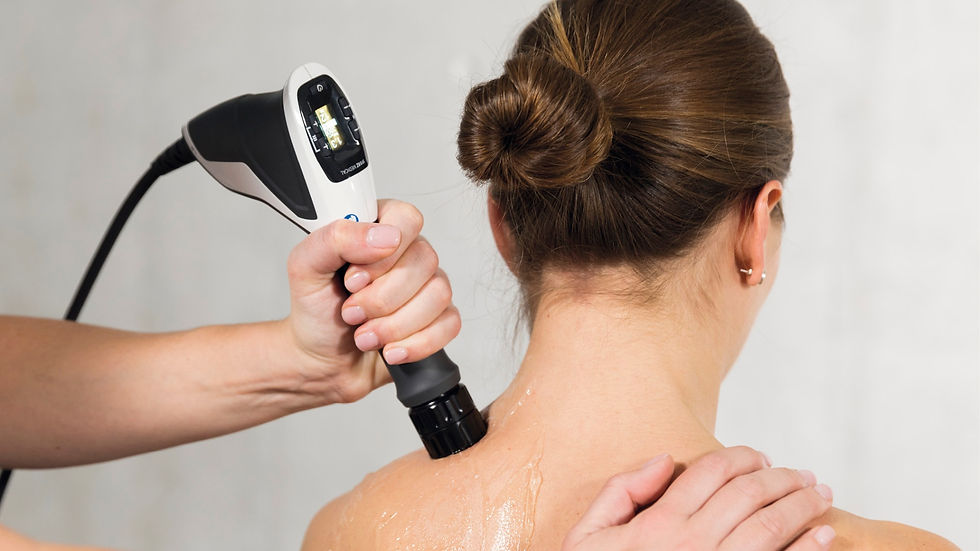
The applicator (the handheld piece) works like a small, specialized drum. It sends out powerful, rapid-fire acoustic pulses right into your tissue.
As these pulses travel through, they meet interfaces within the body where the tissue density changes, think of the boundary between muscle and bone or a chronic patch of scar tissue.
This meeting point is where the magic happens, initiating two key events:
Positive Pressure Phase:
First, there is a quick, rapid surge of pressure that travels right through the tissue.
Negative Tension Phase:
This is the star of the show! Right after the high pressure wave passes, a brief dip in pressure causes minute air bubbles to form. We call them cavitation bubbles. The rapid, controlled collapse of these bubbles creates a tiny, focused stress that essentially gives your cells a 'micro massage'.
That controlled physical stress, not the wave itself, is the ultimate trigger. It is what turns the external sound energy into a strong biological signal, forcing the body to start repairing.
In medical terms, this process is known as mechanotransduction, but you can just think of it as flipping the heal switch.
Once that internal heal switch is flipped, the body initiates a powerful chain reaction. We can break down this biological response into three distinct phases. These are the specific mechanisms that turn that physical energy into lasting relief and structural repair.
Phase 1: Neovascularization (The Blood Flow Boost)
If your chronic injury has been sticking around, chances are the area is like a quiet, abandoned street because it just does not get enough traffic, or blood flow.
The micro stress from the acoustic wave tells your capillaries to wake up and get busy, specifically by releasing important growth factors like VEGF (Vascular Endothelial Growth Factor).
This triggers the formation of brand new arterioles and capillaries. It is like building a new, high speed highway to the injury site.
The Benefit: More blood means more oxygen and nutrients are delivered directly where they are needed, finally giving those stubborn, poorly vascularized tissues, like tendons, the fuel they need for long term repair.
Phase 2: Regeneration & Repair (The Body's Reset Button)
When an injury becomes chronic, healing stalls. Shockwaves basically hit the reset button, nudging that stalled, chronic inflammation back into an acute healing phase, which is the productive phase your body uses to mend tissues.
Collagen Stimulation:
The treatment stimulates fibroblasts activity to repair connective tissue and osteoblasts for bone healing. Their job is to ramp up production of Type I collagen, the essential building block for strong, healthy tendons and ligaments.
Stopping Chronic Inflammation at the Source
Shockwaves effectively target and break down problematic calcium deposits in the tissue. By reducing the specific chemical signals (Substance P and COX-2) that keep inflammation stuck in a chronic state, the therapy clears the way for a genuine, structural repair of the area.
Stem Cell Migration Shockwaves trigger metabolic responses that accelerate tissue repair, stimulate stem cells to migrate to the area, and break down calcified deposits.
Phase 3: Analgesia (Turning Down the Pain Volume)
We all appreciate quick pain relief. Shockwave therapy delivers both immediate and lasting pain reduction through two smart tricks:
Hyperstimulation Analgesia:
During the session, the intense stimulus temporarily overloads the local nerve endings. Think of it like a temporary sensory interruption that gets the pain signal lost on its way to the brain. This is why many people feel an immediate reduction in discomfort.
Reduction of Substance P:
On a chemical level, the acoustic energy dramatically reduces a neurotransmitter called Substance P. Since Substance P is a key player in transmitting pain and fueling chronic inflammation, reducing it naturally contributes to profound, long term pain relief.
Types of Shockwaves: Differentiating Technologies
While the mission to repair tissue remains the same, we use two distinct technologies to get the job done. These are defined by how the wave is generated and exactly how deep the energy travels into your body.
Feature | Focused Shockwave (F-ESWT) | Radial Shockwave (R-SWT) |
|---|---|---|
Think of it as... | A Laser Pointer. It is precise, sharp, and goes deep. | A Megaphone. It spreads sound energy out over a wider area. |
How it works | Electrical Impulse. Uses electromagnetic coils or crystals to generate a sharp pulse. | Compressed Air. A small projectile moves back and forth (like a jackhammer) to create pressure. |
Precision | Pinpoint Accuracy. The energy is concentrated into a specific point deep inside the body. | Wide Coverage. The energy spreads out (diverges) to cover a broader, more superficial zone. |
Depth | Deep. Reaches up to 12cm. Ideal for reaching issues buried under muscle or near bone. | Superficial. Effective up to 3-4cm. Perfect for issues close to the skin surface. |
Best Used For | Deep bone issues, pseudoarthrosis, hip pain, calcifications within the shoulder, and Erectile Dysfunction. | Common tendon pain like Plantar Fasciitis, Achilles tendonitis, Tennis Elbow, and tight muscles. |
Note: Research indicates that both RSWT and FSWT are effective in reducing pain and improving function in patients with tendinopathy, although FSWT may have a slight advantage in pain reduction based on some studies.
Effectiveness for Musculoskeletal Conditions
ESWT isn’t just an 'alternative' anymore. It is a proven standard. The science is solid, backed by years of research and high-level studies.
The medical community now establishes ESWT as a top tier intervention for chronic tendon issues, effectively bridging the gap between conservative care and invasive surgery.
Shockwave therapy is not a magic wand for every single ache, but where it works, it works exceptionally well. It specifically targets areas with low blood flow and chronic, stiff tissue.
Emerging research also highlights its regenerative potential for nerve damage. In fact, utilizing shockwave therapy for neuropathy is showing significant promise in restoring peripheral nerve function and naturally reducing neuropathic pain without pharmaceuticals.
The following table breaks down the clinical success rates for the most common applications.
Condition | The Evidence and Clinical Outcome |
|---|---|
Chronic Plantar Fasciitis (Heel Pain) | High Success Rate. FDA-cleared. Studies consistently demonstrate success rates ranging from 70% to 88%. It is particularly effective for resolving that sharp first step of the morning pain when the fascia is tightest. |
Structural Regeneration. Evidence supports its ability to not just reduce pain, but to stimulate collagen remodeling in the tendon. This improves load tolerance for runners and walkers alike. Success rates for this condition typically range from 60% to 80%
| |
Lateral Epicondylitis (Tennis Elbow) | Functional Grip Strength. FDA-cleared It is proven effective for significantly reducing pain scores and restoring grip strength, allowing patients to return to lifting, typing, or manual work pain free. |
Calcific Tendinopathy (Shoulder) | Deposit Disintegration. ESWT is uniquely capable of mechanically breaking down calcium deposits within the rotator cuff. These are then reabsorbed by the body, restoring range of motion. |
Bone Healing (Fracture Non-unions) | Stimulating Growth. In more advanced applications, typically using Focused Shockwave, it is successfully used to treat non-union fractures, which are bones that have failed to knit together, by stimulating new bone growth. |
I have been going... for my tennis elbow now for a few months. Their physio and shockwave therapy treatment are fantastic and with immediate pain relief and a well thought out recovery program to help keep the pain away. Ting Tang (Compass Health Clinic Reviews)
Effectiveness for Erectile Dysfunction (ED)
While there are many advertisements of clinics offering to treat Erectile Dysfunction (ED) with shockwave therapy, it is important to know that this specific application is not FDA approved in the United States and is officially considered an off-label treatment.
Because of this, please consult with a qualified medical professional before making any decisions regarding this treatment.
However, even though it is still considered off-label, there is a strong biological rationale for why it can help, supported by clinical data.
We know that researching this topic can feel overwhelming. The most common concern for anyone looking into this therapy is simply whether it actually works.
The short answer is yes, particularly for vasculogenic ED, which is ED caused by blood flow issues.
Unlike pills that temporarily force blood into the area, shockwave therapy is designed to improve the physical machinery of an erection. It is currently the only non-invasive treatment that aims to correct the underlying biology rather than just managing symptoms.
Fixing the Hardware vs. Patching the Problem
Standard ED treatments like Viagra or Cialis are on-demand solutions. They work only when you take them. Low-Intensity Shockwave Therapy (LiSWT - Focused Shockwave Therapy) takes a different, regenerative approach.
Targeting the Source:
The majority of ED cases are vasculogenic, meaning they stem from poor blood flow due to aging vessels or micro-plaque buildup.
Angiogenesis (New Vessel Growth):
The primary mechanism here is angiogenesis, the physiological process of growing new blood vessels. By delivering low-intensity pulses, LiSWT stimulates the release of vascular growth factors, encouraging the formation of new, healthier blood vessels.
The goal is to restore natural blood flow so that spontaneous erections are possible again without medication.
Is Shockwave Therapy Effective: What the Clinical Data Says
The clinical data supports LiSWT as a viable option, particularly for men with mild to moderate ED.
Measurable Improvements: Multiple meta-analyses have compared LiSWT against placebo treatments. Results consistently show a statistically significant improvement in the International Index of Erectile Function (IIEF) scores.
Success Rates: Clinical studies suggest that approximately 60% to 75% of men respond positively to the treatment.
The process didn't seem to work the first couple of treatments because it's not an instant fix, but by the time I had the 6th session, all my issues have completely gone away... and I'm not having any struggle to get or maintain an erection. Mark, Edinburgh (ED Clinics UK)
Who Benefits Most: The therapy is most effective for men who still respond well to oral ED medications but want to reduce their reliance on them. It also shows mixed but promising results for non-responders, men for whom pills no longer work, often re-sensitizing them to medication.
The Investigational Label: Understanding the FDA and AUA
This is often the most confusing part for American patients. If you visit a clinic, they offer the treatment, but if you read the American Urological Association (AUA) website, it says investigational.
Here is how to interpret that discrepancy so you can make an informed choice.
Perspective | The Stance | What it Means for You |
|---|---|---|
The US Stance (FDA & AUA) | Investigational / Off-Label | In the US, these devices are FDA Class II medical devices cleared for soft tissue repair and improved blood flow. However, they do not yet have a specific label strictly for ED. The AUA calls it investigational simply because they want more standardized protocols on dosage before calling it a Standard of Care. |
The Global Stance (EAU) | First-Line Therapy | In Europe, medical guidelines are often ahead of the US curve regarding this technology. The European Association of Urology (EAU) officially lists LiSWT as a therapeutic option for vasculogenic ED, validating its ability to reverse the condition. |
The investigational label in the US is largely about standardization, not a denial of the biology.
However, it means you must be careful to choose a provider who uses clinical-grade technology, typically Focused Shockwaves, rather than unverified acoustic wave devices often sold for home use.
Cost and Insurance Coverage
One of the most pressing questions for anyone considering Extracorporeal Shockwave Therapy (ESWT) is: Will my insurance cover this? The financial landscape is complex and depends heavily on your specific condition.
The total cost is highly variable based on the type of shockwave used, provider location, and the number of sessions required.
Cost Per Session: A single session typically costs between $150 and $500 in the US.
Total Treatment Cost: Since most protocols require 3 to 6 sessions, the full out-of-pocket regimen often ranges from $750 to over $3,000.
Savings: Most clinics offer discounted package pricing for a full course, which is more affordable than paying per visit or even the first session for only $49.
Shockwave Therapy Coverage Overview
Target Condition | Coverage Status | Key Requirement / Reason |
|---|---|---|
Calcific Tendinopathy (MSK) | Sometimes Covered (Most likely to be approved) | Insurers may deem it medically necessary if chronic pain exists for 6 months and conservative therapies have failed. |
Common Tendon Issues (MSK) (Plantar Fasciitis, Tennis Elbow) | Generally Not Covered | Insurers often classify it as experimental or unproven for soft tissue, despite high success rates. |
Vasculogenic ED (LiSWT) | Universally Not Covered | Classified as purely investigational by US health insurance, Medicare, and government plans. |
What to Expect
A typical session is fast, usually lasting just 15 to 20 minutes. Most clinical protocols require a course of 3 to 5 sessions, spaced one week apart.
One of the aspects patients appreciate most is how easily Shockwave Therapy fits into a busy life. Unlike surgery, which requires weeks of recovery, ESWT is a walk-in, walk-out procedure.
While many patients feel immediate relief after the first session due to the analgesic effect, the real tissue regeneration takes time. It is vital to complete the full course to ensure the biological changes, like new blood vessel growth, become permanent.
Side Effects and Safety Profile
Because ESWT is non-invasive, meaning no needles and no incisions, the safety profile is excellent.
During Treatment: You may feel some discomfort or a tapping sensation on the bone. We want you to be prepared for this, but keep in mind the intensity can be adjusted by your provider to keep it tolerable.
Post-Treatment: Side effects are generally mild and temporary. You might experience slight redness, minor swelling, or a dull ache in the treated area, similar to how a muscle feels after a workout. These usually subside within 24 to 48 hours.
Crucial Aftercare
Avoid Anti-Inflammatories and Ice.
To get the best results, there is one golden rule you must follow. Because Shockwave Therapy works by deliberately creating a beneficial, pro-inflammatory response to trigger healing, you must not suppress that process.
For the duration of your treatment, and usually for a few weeks after, do NOT use ice on the area and do NOT take NSAIDs (Non-Steroidal Anti-Inflammatory Drugs).
Common NSAIDs include Ibuprofen (Advil, Motrin), Naproxen (Aleve), and Aspirin.
These drugs constrict blood vessels and stop inflammation.
If you take them, you are essentially turning off the biological signal the shockwave just turned on, effectively canceling out the benefits of the session.
If you need pain relief, stick to Tylenol (Acetaminophen), which does not block the inflammatory healing response.
Wrapping It Up
Extracorporeal Shockwave Therapy represents a significant shift in how we approach chronic pain and dysfunction.
We are moving away from the cycle of simply managing symptoms with pills or cortisone shots and toward a solution that actually repairs the biological machinery.
Whether you are an athlete eager to get back on the track without heel pain, or a man seeking to restore vascular health and confidence, the science is clear.
Your body has an incredible capacity to heal itself.Sometimes, it just needs a loud enough wake-up call to get started.
Your Next Steps As you consider this treatment, remember that technology matters.
For deep issues, bone non-unions, or Erectile Dysfunction, ensure your provider uses Focused Shockwave.
For superficial tendon pain like tennis elbow, clinical-grade Radial Shockwave is an excellent choice.
Do not hesitate to ask your provider specific questions about their equipment and their experience. You have taken the first step by understanding the science. Now, the next step is finding a qualified provider to help you turn that science into relief.
FAQ
What is extracorporeal shock wave therapy and how does shockwave therapy work?
Extracorporeal shockwave therapy (also known as shock wave therapy) is a non invasive treatment used in physical medicine to promote healing. A handheld device placed against the patient's skin delivers acoustic pressure waves directly to the treatment area. These acoustic waves create controlled micro-trauma in the soft tissue, triggering a biological healing process. This leads to increased blood flow, cell proliferation, and collagen synthesis for true tissue regeneration, making it a highly effective advanced treatment to try before considering more invasive treatments.
What musculoskeletal conditions and sports injuries does this treat?
Clinical studies and a systematic review of emerging evidence highlight impressive shockwave therapy effectiveness for chronic pain, sports injuries, and general musculoskeletal conditions. Sports medicine specialists in sports med routinely use it for treating tendinopathies and musculoskeletal disorders, including:
Plantar fasciitis
Lateral epicondylitis (tennis elbow)
Patellar tendinopathy (jumper's knee)
Pain at the tendon bone junction
Greater trochanter pain syndrome
It is also a proven conservative treatment for nonunion fractures, stress fracture healing, and chronic tendon injuries (helping prevent a full tendon rupture). While similar acoustic technology historically treated kidney stones, today's orthopedic applications focus strictly on physical repair, not neurological disorders like multiple sclerosis.
What is the difference between focused and radial shockwave therapy?
Focused extracorporeal shockwave therapy: Uses precise, deep-penetrating focused shock waves for deep bone issues or complex soft tissue injuries.
Radial shock wave therapy: Uses pneumatic projectile strikes to deliver broader, shallower waves for widespread musculoskeletal injuries and general pain reduction.
Does shockwave therapy cause adverse effects or require local anesthesia?
No local anesthesia is needed for this noninvasive treatment. Most patients tolerate the procedure well. Adverse effects are minimal, typically limited to temporary soreness. Unlike traditional treatments or standard physical therapy, you must avoid ice and anti-inflammatories afterward, as suppressing inflammation halts the vital blood supply and healing benefits.
How does this compare to other therapies and invasive treatments?
Multiple studies show extracorporeal shockwave therapy eswt is an excellent alternative to surgery. When compared to other treatments like platelet rich plasma (PRP) or steroid injections, shockwave treatment physically stimulates blood flow to reduce pain without the use of needles. It is a preferred choice for professional athletes and everyday individuals alike dealing with stubborn pain.
Do insurance plans cover this treatment?
While it is an effective treatment for restoring function, many insurance plans still classify it as investigational for certain soft tissue issues. Coverage is highly dependent on your specific diagnosis and policy.
External Links
Mayo Clinic. For MSK Research: The Mayo Clinic on Tennis Elbow and Therapies
For ED Guidelines (Europe): European Association of Urology Guidelines
Clinical Studies: Search Extracorporeal Shockwave Therapy on PubMed.gov for the latest randomized controlled trials.
Just Healthy. Read more about Shockwave Therapies.


